


How Thermal Imaging Works: A Simple Guide
Imagine spotting a fox glowing against a cold paddock in the middle of the night, with no visible light. This is the power of...

One of the most common questions we get from customers is:
"Can I use a thermal scope during the day?"
The answer is simple—absolutely.
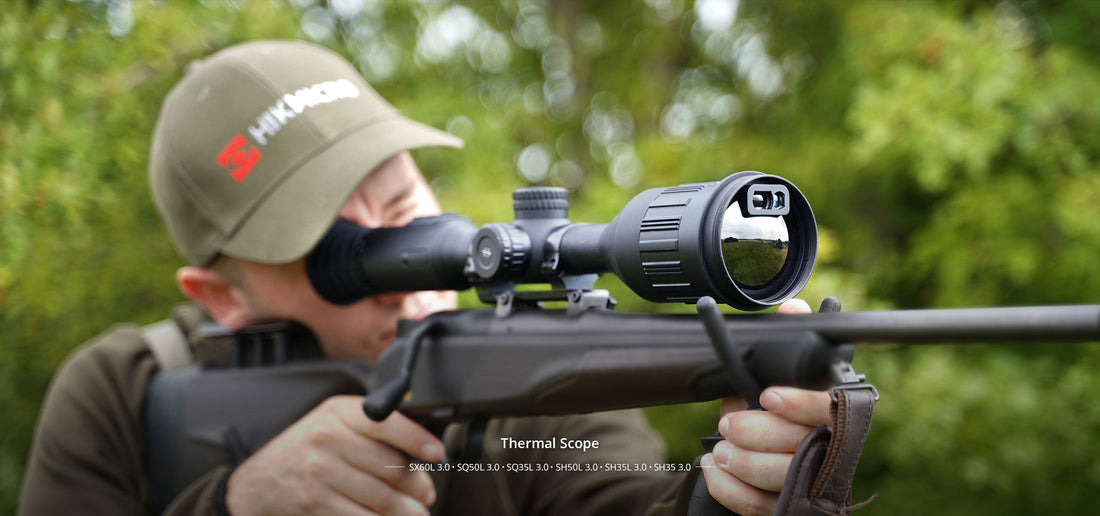
Yes, you can use a thermal scope during the day, just as you can at night. Unlike traditional optical scopes, thermal scopes do not rely on visible light or sunlight. Instead, they detect infrared radiation (heat energy) and display temperature differences between animals and their surroundings, helping you identify heat signatures in areas such as thick brush, shaded ground, and open terrain.
However, daytime heat can affect thermal imaging performance. As sunlight warms the ground, trees, and other surfaces, the temperature difference between animals and their surroundings may become less noticeable, reducing image contrast. Factors such as ambient temperature, humidity, sensor sensitivity (NETD), and environmental conditions can also influence image clarity. If you plan to use a thermal scope for hunting in Australia, check your state or territory's hunting regulations before use, as restrictions may apply.
Unlike traditional scopes that depend on visible light, thermal scopes use sensors to detect heat emitted by animals, people, and other objects. They convert these temperature differences into visible images, helping users identify heat signatures in different environments.
Thermal imaging works in various conditions, including:
This makes thermal optics useful for daytime and nighttime wildlife observation, property monitoring, and authorised pest management.
Thermal scopes work just as well in daylight as they do at night because they detect heat rather than visible light. However, strong sunlight can affect how clearly you see an animal through the lens. As the sun heats the ground, rocks, trees, and vegetation, the temperature difference between animals and their surroundings becomes smaller, making heat signatures harder to distinguish.
Here are a few factors that can affect daytime thermal scope performance:
Improve daytime thermal imaging by adjusting your scope to match the surrounding environment. Follow these essential steps:
Choosing the right colour palette helps improve target visibility in different environments. Most thermal scopes offer White Hot, Black Hot, Red Hot and Rainbow modes, each displaying heat signatures differently depending on the surroundings and temperature contrast.
Here is how each colour palette works and when you might find it useful:
Remember: No single colour palette works best in every hunting situation. Try switching between modes as your surroundings change to find the clearest heat signature and maintain better visibility.
Thermal riflescopes are particularly useful during day hunting when animals are difficult to spot with traditional optics. They detect heat signatures, making it easier to locate wildlife in situations where visibility is limited. Some of the best daytime hunting scenarios include:
Daytime thermal performance depends on weather, terrain, and temperature differences between animals and their surroundings. Here is what hunters can expect:
Thermal imaging works in both daylight and darkness because it detects infrared radiation (heat) rather than visible light. However, environmental conduction and temperature differences between an animal and its surroundings can influence detection performance.
Performance Attribute | Daytime Thermal Performance | Nighttime Thermal Performance |
|---|---|---|
Heat Contrast | Direct sunlight warms the ground, vegetation, and other surfaces, which can reduce temperature differences between animals and their surroundings. | Cooler surroundings can create greater temperature differences, making animal heat signatures easier to distinguish. |
Image Clarity | Warm backgrounds and changing surface temperatures can make some targets harder to distinguish. | Cooler backgrounds may improve target separation and make heat signatures more noticeable. |
Detection Range | Detection remains possible, but high ambient temperatures and low thermal contrast can affect identification and detection distance. | Stronger thermal contrast can improve target detection, although range still depends on sensor resolution, lens quality, and weather conditions. |
Environmental Conditions | Solar heating, warm ground, and heated vegetation can influence thermal image quality. | Cooler terrain and vegetation can improve thermal contrast, while fog, rain, and humidity may still affect performance. |
Practical Hunting Applications | Useful for scanning shaded areas, woodland edges, and cooler locations where animals may be concealed. | Effective for spotting wildlife during low-light conditions, particularly when cooler surroundings provide better thermal contrast. |
Check out our night vision scope collections for perfect nighttime hunting.
Thermal riflescopes can make day hunting easier when animals are difficult to spot with traditional optics. Since they detect heat rather than relying on visible light, they help hunters identify wildlife in thick vegetation, shaded areas, and other places where visibility is limited. Here are some situations where they can be particularly useful:
Getting a clear thermal image during the day depends on more than just the device's resolution. Adjusting the display and image settings can also help you identify heat signatures more easily in different hunting conditions. For better daytime clarity, focus on these settings:
When choosing a thermal scope for daytime use, consider the following key features to get clear images and reliable performance:
Thermal hunting regulations vary across Australia, depending on the state or territory, target species, land type, and time of day. Although thermal optics can generally be purchased and owned without a firearms licence, their use while hunting is subject to local regulations. In NSW, for example, anyone using a firearm on public land must hold both a Restricted Game Hunting Licence and a firearms licence. Check the NSW DPI hunting rules and regulations before heading out, particularly when hunting on public land.
Thermal riflescopes are commonly used to locate pest animals such as foxes, feral pigs and feral cats, but always confirm that thermal equipment is permitted for your intended hunting activity. Make sure you positively identify your target and check what is behind it before taking a shot.
Find a thermal scope that suits your daytime hunting needs, with features such as clear thermal imaging, reliable detection range and adjustable viewing modes. Here are some options available at Good Hunt.
The HIKMICRO has established itself as one of the leading names in thermal imaging. Their latest thermal scopes offer excellent image quality, high-sensitivity sensors, and advanced image processing designed to perform in a wide range of environments.
For hunters who want reliable daytime and nighttime performance, HIKMICRO thermal scopes continue to be a popular choice.
Nocpix has quickly gained a reputation for delivering impressive thermal performance and outstanding value. With high-resolution sensors and advanced image enhancement technology, Nocpix thermal scopes provide clear target detection throughout the day and night.
Hunters looking for cutting-edge thermal technology are increasingly turning to Nocpix for both recreational and professional use.
Guide thermal scopes feature high-sensitivity thermal sensors, advanced image processing, and adjustable viewing modes to help hunters detect animal heat signatures during daytime hunting. Their imaging performance supports wildlife detection across open fields and dense vegetation, with results depending on temperature contrast, weather, and terrain conditions.
Rix thermal scopes use heat detection technology to help hunters identify animal heat signatures, even when wildlife is partially concealed by vegetation or blending into the surroundings. Unlike traditional optical scopes that rely on visible light, Rix thermal optics detect temperature differences to improve wildlife detection during daylight and low-light conditions. Their thermal imaging capabilities make them useful for scanning hunting areas where visual identification can be challenging.
The PARD thermal scopes are suitable for both daytime and nighttime hunting, as they detect heat signatures rather than relying on visible light. During the day, they help hunters locate animals in open fields and partially covered vegetation by highlighting temperature differences between wildlife and its surroundings. However, warmer ground temperatures can reduce thermal contrast, so image clarity depends on weather conditions and the scope's sensor performance.
Using thermal devices during daylight requires proper settings and an understanding of environmental conditions. Hunters should avoid these common mistakes to maintain better heat detection and image clarity.
If you've been wondering whether thermal scopes are only useful after dark, the answer is a definite no.
Day hunting with thermal has become increasingly popular because it allows hunters to detect animals faster, cover more ground, and hunt more efficiently. Whether you're using a HIKMICRO or Nocpix thermal scope, you'll benefit from technology that works around the clock, regardless of lighting conditions.
If you're considering adding thermal imaging to your hunting setup but aren't sure which model is right for you, contact our team for expert advice. We're always happy to help you find the best thermal solution for your needs.
Whether you're looking at your first thermal scope or comparing the latest HIKMICRO and Nocpix models, our team is here to help. We use the gear ourselves and are happy to answer any questions you may have about thermal hunting, optics, or finding the right setup for your needs.
Contact Good Hunt:
Website: www.goodhunt.com.au
Phone: 0477 456 463
Address: High Street, Maitland NSW 2320
Get in touch today for expert advice, product recommendations, and real-world hunting experience you can trust.
Not sure which gear actually suits your hunt? Book a live demo and get hands-on advice from people who use this stuff themselves. No guesswork. No pressure. Just straight answers.

© 2026, Good Hunt Australia. All rights reserved.
Your cart
Your cart is empty

Recently viewed products