


How to Choose a Thermal Scope for Hunting?
The right thermal scope for your hunting needs by comparing sensor resolution, detection range, thermal sensitivity, magnification, and battery life. The best thermal scope...
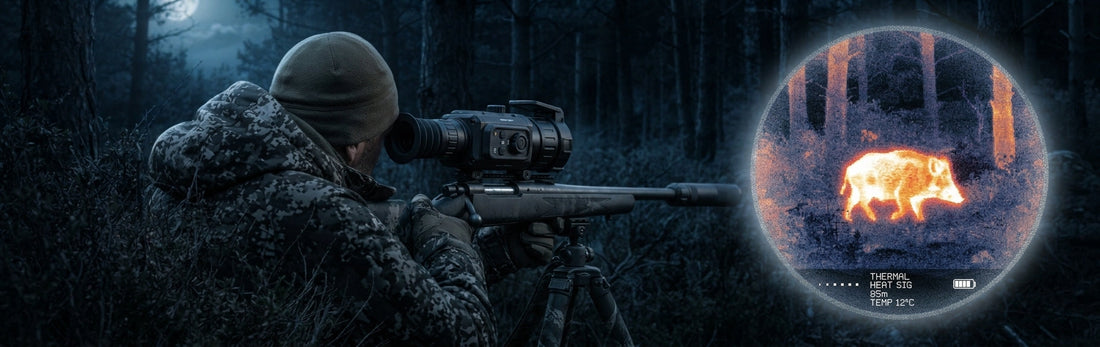

Imagine spotting a fox glowing against a cold paddock in the middle of the night, with no visible light. This is the power of thermal imaging technology. But how can thermal binoculars and scopes detect animals and other objects in complete darkness?
So, how does thermal imaging work?
Unlike traditional night vision, which relies on available light, thermal imaging detects infrared radiation (heat) emitted by objects and converts it into a visible image. This allows users to detect heat signatures in complete darkness, daylight and various low-visibility conditions.
Whether you're exploring thermal optics for hunting, wildlife observation or property management, understanding how this technology works will help you make a more informed choice. Let's take a closer look at the technology behind thermal imaging and how it works.
Thermal imaging and traditional night vision both improve visibility in low-light conditions, but they work in fundamentally different ways.
Traditional night vision uses image intensification technology to collect and amplify small amounts of available light, such as moonlight and starlight, making objects easier to see in dark environments. However, it relies on ambient light to produce an image and may struggle in extremely dark conditions without an additional infrared illuminator.
Thermal imaging, on the other hand, detects infrared radiation (heat) naturally emitted by objects rather than relying on visible light. Thermal devices such as thermal scopes, thermal binoculars and monoculars capture these heat signatures and convert them into a visible image, allowing users to detect animals, people and other warm objects in complete darkness, daylight and certain challenging conditions, including light smoke and haze.
| Comparison Point | Thermal Imaging | Traditional Night Vision |
|---|---|---|
| How It Works | Detects infrared radiation (heat) emitted by objects. | Collects and amplifies available light to create an image. |
| Light Requirements | Does not require visible light to operate. | Requires some ambient light, such as moonlight or starlight. |
| Complete Darkness | Works in complete darkness without an additional light source. | May require an infrared illuminator in extremely dark conditions. |
| What It Detects | Detects heat signatures from animals, people and other warm objects. | Reveals objects using reflected light. |
| Daytime Use | Can be used during both day and night. | Primarily designed for low-light and nighttime use. |
| Environmental Conditions | Can detect heat signatures in certain challenging conditions, including light smoke and haze. | Visibility depends on available light and environmental conditions. |
| Image Details | Highlights heat differences but may show fewer natural environmental details. | Provides more recognisable environmental details, shapes and surroundings. |
| Best For | Detecting animals, spotting heat signatures and locating targets in darkness. | Identifying objects, observing surroundings and navigating in low-light conditions. |
Thermal scopes and monoculars use thermal imaging technology that detects infrared radiation (heat) and converts it into visible images using specialised lenses, thermal sensors and image processors. Here's the working mechanism of thermal imaging devices:
A thermal imaging device uses a specialised objective lens, commonly made from germanium, to capture infrared radiation emitted by surrounding objects. It focuses long-wave infrared energy (typically 8–14 micrometres) onto the thermal sensor.
Most handheld thermal optics use an uncooled microbolometer sensor containing thousands of tiny pixels. Each pixel responds to incoming infrared energy, measuring temperature differences between animals, objects and their surroundings.
An internal processor analyses the sensor readings, corrects irregularities and converts the collected infrared information into a digital thermal image, known as a thermogram. This makes warmer objects easier to distinguish from cooler backgrounds
The processed image appears on a built-in OLED or LCOS display, depending on the device. Different brightness levels and colour palettes represent temperature variations, allowing users to detect and observe animals, people and other heat sources in real time.
Also Read: How to choose the right thermal scope for hunting?
Thermal binoculars use the same technology as thermal scopes and monoculars, but are packaged for scanning. A large front lens focuses heat onto the sensor, and the processed image is displayed through one or two eyepieces. Because they are built for glassing, they usually include:
Hunters and property managers use thermal binoculars as a spotting tool first. You can locate and identify animals from a distance before making a decision on what to do next.

Thermal optics use different colour palettes and display modes to represent temperature differences between objects and their surroundings. These settings help you identify heat signatures and distinguish animals from backgrounds in different environments.
Common thermal colour palettes include:
Choosing the right colour palette depends on your personal preference, viewing conditions, and the surrounding environment. You can switch between display modes to help improve image clarity and make it easier to detect animals at different distances.
When comparing thermal binoculars, monoculars and scopes, understanding key specifications helps determine image quality, detection performance and overall usability.
1. Sensor Resolution
Sensor resolution refers to the number of pixels in a thermal sensor. Common options include 256 × 192, 384 × 288 and 640 × 512. Higher resolution generally provides more image detail, making it easier to observe and identify animals at greater distances.
2. Pixel Pitch
Measured in micrometres (µm), pixel pitch refers to the distance between individual sensor pixels. Common options include 12 µm and 17 µm. Smaller pixel pitch allows more compact sensor designs, although overall image quality also depends on resolution and lens performance.
3. NETD (Thermal Sensitivity)
NETD measures how well a sensor detects small temperature differences and is expressed in millikelvin (mK). A lower NETD indicates better thermal sensitivity. For example, ≤15 mK offers greater sensitivity than 40 mK, helping distinguish heat signatures in challenging conditions.
4. Refresh Rate
Measured in Hertz (Hz), refresh rate indicates how frequently the displayed image updates. Common options include 25 Hz, 30 Hz and 50–60 Hz. Higher refresh rates generally provide smoother images when observing moving animals.
5. Lens Size
The objective lens collects infrared energy and directs it towards the sensor. Larger lenses generally support greater detection distances but can increase device size and weight. The ideal lens depends on viewing distance and field-of-view requirements.
6. Detection vs Identification Range
Understanding these three measurements is important when comparing thermal optics:
7. Battery Life
Battery capacity and power consumption determine how long a thermal scope can operate in the field. Longer battery life is useful for extended hunting sessions.
8. Weather Resistance
Check the IP rating to understand how well the device handles dust and water exposure. For example, IP67-rated devices are dust-tight and can withstand temporary immersion in water under specified test conditions.
9. Image Processing Features
Features such as digital zoom, image enhancement, and different colour palettes can improve viewing and help hunters interpret thermal images in different environments.
Although thermal imaging works well in darkness and low-light conditions, it has certain limitations. Understanding these helps set realistic expectations when using thermal equipment.
Thermal imaging technology is used across several industries because it can detect heat signatures without depending on visible light.
Some of its most common applications include:
Know the rules before you hunt: Regulations on thermal and night-vision equipment vary depending on the state and land type. Always check local hunting regulations before use. For NSW hunters, refer to the official NSW DPI hunting rules and regulations for further information.
Thermal imaging makes it possible to detect heat signatures in complete darkness and challenging visibility conditions. Understanding how thermal sensors, resolution, NETD and lens size work helps you compare thermal binoculars, monoculars and scopes with confidence.
Whether you're hunting, monitoring livestock or managing rural properties, choosing the right thermal optics depends on your viewing requirements, environment and budget. Explore the range of thermal optics at Good Hunt and find the right equipment for your needs.
If you're unsure which device to choose, contact our team for expert guidance.
A thermal device collects the invisible heat that all objects give off, measures differences in that heat with a sensor and displays those differences as a picture.
They focus infrared energy through a germanium lens onto a microbolometer sensor. A processor turns the signal into an image, which is viewed through the eyepieces.
A thermal scope detects infrared radiation (heat) emitted by animals and converts it into an image, making them visible against their surroundings.
Yes. It detects heat, not light, so it works with no light at all.
They handle light fog, smoke and sparse foliage better than the naked eye, but dense cover and heavy rain reduce performance.
Yes. Heat is always present, though warm sun on the ground can reduce contrast. Many hunters get the best results at dawn, dusk, and night.
It depends on distance and budget. Higher resolution gives more detail for identifying animals at range, while lower resolution work well for close-to-mid-range scanning.
Not sure which gear actually suits your hunt? Book a live demo and get hands-on advice from people who use this stuff themselves. No guesswork. No pressure. Just straight answers.

© 2026, Good Hunt Australia. All rights reserved.
Your cart
Your cart is empty

Recently viewed products